
OnlyFans subscriptions rarely stay singular. Most subscribers begin with one page at $4.99, add a second within a month, and quietly carry four or five active plans before they notice the total. The problem is not the price of any single plan but the absence of a system for running several low-cost subscriptions without letting their content, billing dates, and budgets overlap. This guide treats a small portfolio of five-dollar subscriptions the way an analyst would treat any recurring expense: tagged, dated, measured, and reviewed. BestOnlyFans built its ranking methodology around exactly this kind of structured comparison, and the framework below borrows the same logic for personal use.
Or a promotional price quietly converts to a full base rate while attention moves elsewhere. Each failure is fixable with simple tracking, and none of them require abandoning the low-cost strategy. BestOnlyFans refreshes its rankings every month.

The Five Dollar Tier: Anatomy of a Standard OnlyFans Plan
The platform’s paid subscription floor is $4.99, and that number anchors an entire pricing culture. Creators cluster at the entry point because it converts well, sits below most impulse-spending thresholds, and still generates meaningful revenue at volume. A subscription between $4.99 and about $15 covers the overwhelming majority of paid pages, with averages concentrating in the $5-$10 band.
Feed access is universal. Two pages at the same price can therefore deliver substantially different value, which matters when several subscriptions run in parallel.
| Component | Typical Inclusion | Common Variation |
|---|---|---|
| Main feed access | Full posting history and new posts while subscribed | Some pages archive older posts or restrict the backlog |
| Direct messaging | Open inbox for subscriber replies | Paid chat commonly runs $3-$5 per message |
| PPV messages | Optional unlocked content sent to the inbox | Individual unlocks reach up to $50 |
| Live streams | Occasional or scheduled broadcasts | Some pages run no live content at all |
| Promotional first month | Discounted entry such as $3 for month one | Renews at the standard base rate afterward |
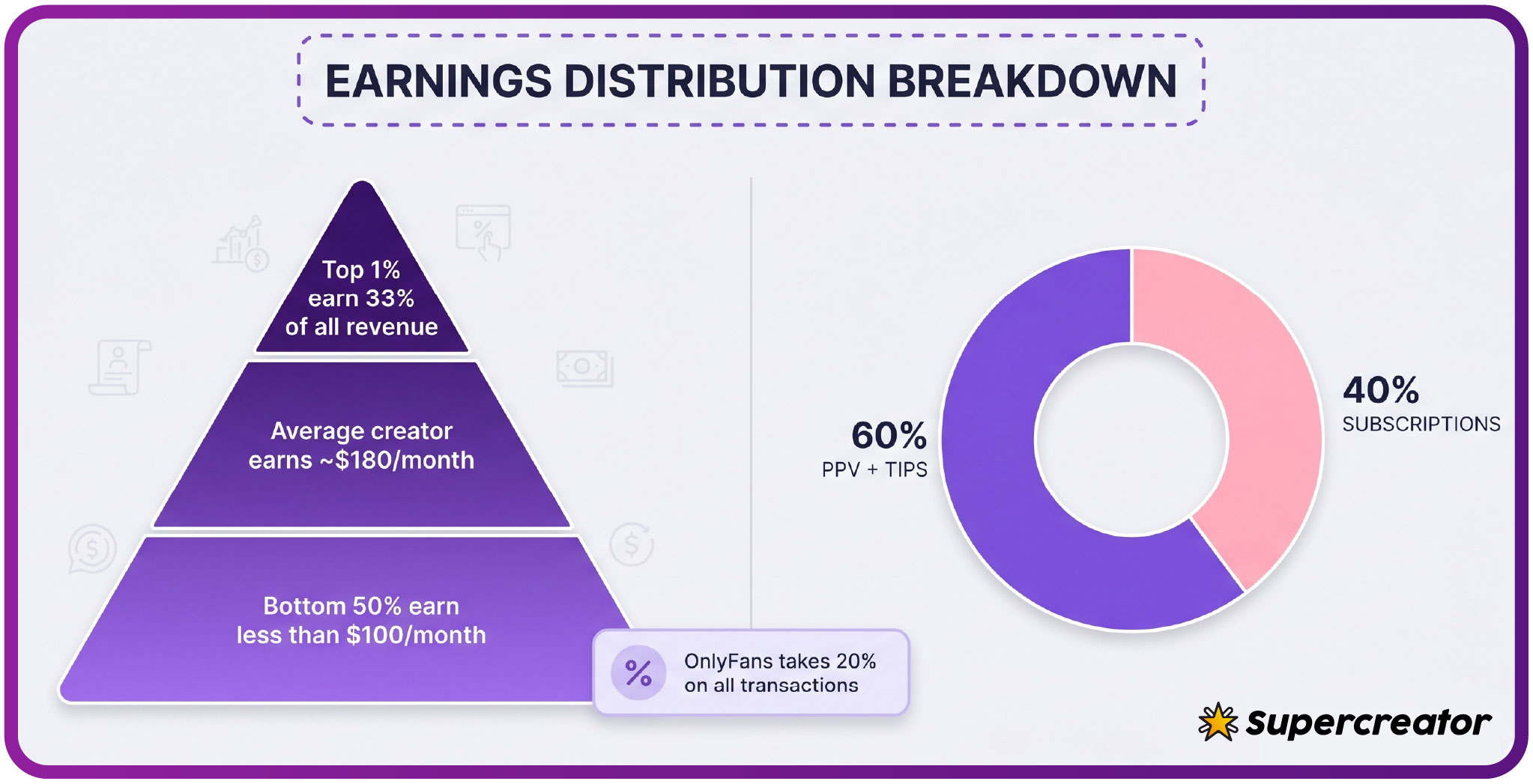
Free pages operate on a different model: the base price is set to $0 and revenue comes from PPV messages and tips. Tips can reach $100, and the platform takes a 20% cut of everything while the creator keeps 80%. A free page shifts spending from a predictable monthly charge to variable, per-item decisions, which changes how it should be tracked inside a portfolio.
Tip: when a creator raises the base price, auto-renew stops automatically and existing access continues only until the paid period ends. Treat any price-change notification as a forced review point rather than an automatic renewal.
It is not a subscription cost, but it appears on statements and occasionally causes confusion when several new subscriptions start in the same week.

Mapping Content Categories Across Your Subscription Portfolio
Redundancy is the quietest form of overspending. Two pages can look distinct from their previews and still occupy the same content space once both are active. The fix is to tag every subscription across several independent dimensions rather than one broad category label.
- Format emphasis: photo sets, long-form video, short clips, or text-heavy posting.
- Interaction style: broadcast-only, casual replies, or active paid chat.
- Update frequency: daily posting versus weekly drops versus irregular bursts.
- PPV reliance: feed-first pages versus inbox-driven monetization.
- Niche specificity: narrow topical focus versus broad general content.
- Collaboration level: solo posting versus frequent guest appearances.
Two pages that share four or more tags are likely to feel interchangeable within a few weeks. That overlap prediction is more reliable than preview galleries, which are curated to look distinctive. Tagging takes about two minutes per subscription and prevents the most common form of duplicate spending.
The exercise also reveals gaps. A portfolio of five pages with identical tags is not diversified, it is concentrated. Rotating one of them out for a page with a different format emphasis usually adds more perceived value than adding a sixth similar subscription.
Synchronizing Billing Cycles for Low-Cost Subscriptions
Renewal dates determine how a portfolio feels. Staggered dates spread charges across the month, which smooths cash flow but obscures the running total. Aligned dates concentrate spending into a single visible event, which is easier to audit but requires more upfront planning. Neither is universally correct.
- Intentional stagger: spread renewals across the month so no single week carries the full load.
- Intentional alignment: cluster all renewals within a short window so one review covers everything.
- Hybrid clustering: group renewals by content priority, keeping high-value pages aligned and experimental ones scattered.
Core pages renew together on dates that match a monthly review session, while trial subscriptions renew separately so they can be evaluated without pressure from the rest of the portfolio.

Tracking Total Commitment Across Multiple Active Pages
Five subscriptions at $4.99 add up to $24.95 per month, which is a meaningful recurring expense disguised as five small ones. The psychological gap between “five cheap plans” and “a twenty-five dollar monthly commitment” is where most portfolios drift.
- Base subscriptions: the sum of every active renewal, calculated at standard rate, not promotional rate.
- Promotional expirations: first months priced at $3 that convert to full base rates.
- Cross-page PPV duplication: similar unlocks purchased on two pages in the same month.
- Tip reciprocity: the tendency to tip more when several creators are active simultaneously.
- Wallet rounding: top-ups that exceed actual spending and leave residual balances.
A simple spreadsheet column that sums base renewals at standard rates eliminates most surprises. Promotional pricing is legitimate and useful, but it should never be the number used for planning, because base prices may not fall below $4.99 and the promotional rate is temporary by design.
A $0 base subscription adds no fixed cost but can quietly consume more than a paid plan through PPV and tips. Tracking it in the same ledger as paid renewals keeps the total comparison honest across both models.
Setting Cancellation Triggers Before You Subscribe
Decisions made in advance are better than decisions made while looking at a renewal notice. Defining exit conditions before subscribing converts cancellation from an emotional choice into a mechanical one.
- Zero main feed posts in fourteen days without a stated hiatus.
- Three consecutive identical PPV offers suggesting recycled inventory.
- An unanticipated base price increase above the planned monthly allocation.
- Discovery of a parallel free page carrying equivalent content.
An external ranking reference can help here. Checking who has most fans on onlyfans gives a popularity baseline that is useful for judging whether a page’s activity level matches its audience size, which in turn informs whether a posting gap is unusual or simply normal for that account.

Cancellation itself is immediate with respect to auto-renew but not with respect to access. The current paid period runs to its end, which means a trigger decision made mid-cycle still delivers the full value already purchased. There is no penalty for deciding early.
Using BestOnlyFans Category Filters to Diversify Selections
The platform has no built-in discovery feed or directory, which is the entire reason ranking sites exist. Without one, subscribers find pages through social media links and word of mouth, a process that naturally produces clustered, similar selections. Deliberate filtering is the counterweight.
| Filter Type | What It Reveals | Selection Application |
|---|---|---|
| Content category | The page’s primary niche focus | Prevents two subscriptions occupying the same category |
| Price band | Where the base rate sits between $4.99 and $49.99 | Keeps portfolio totals inside a fixed monthly allocation |
| Activity status | How recently the page posted | Flags dormant accounts before renewal rather than after |
| Media ratio | Balance of photos, video, and text posting | Adds format variety across otherwise similar categories |
This is where the brand’s taxonomy adds practical value: it turns “find something different” into a set of checkable attributes. A portfolio built with four distinct categories, mixed price bands, and confirmed recent activity is structurally resistant to overlap.

Security settings belong in the same review. Two-step authentication on the account protects payment history and subscription lists, both of which become more sensitive as the number of active plans grows.
Monthly Portfolio Review Rituals for Low-Cost Subscribers
The review is not about cutting spending for its own sake; it is about confirming that each active plan still earns its place in a fixed allocation. Five checklist items cover the essentials.
- Actual versus planned spend: compare the statement total against the portfolio sum.
- Content novelty score: rate how much of the month’s content felt new.
- Engagement recollection test: name one specific post from each page without checking.
- PPV purchase regret tally: count unlocks that were not worth the price.
- Replacement candidate status: whether a shortlisted alternative is ready to swap in.
If a page cannot be recalled without opening the app, it is a strong cancellation candidate regardless of price. Pages that pass all five items are worth keeping even if a cheaper alternative exists.

The long-term view matters too. As the platform has matured, the number of pages competing for the same subscribers has grown, which makes deliberate portfolio construction more valuable than it was when choice was limited. A subscriber running five plans with clear category separation, aligned billing, and defined exit triggers is effectively running a small managed fund of attention rather than a scatter of impulse purchases.
FAQ
Is there a limit to how many OnlyFans subscriptions can be active simultaneously?
The practical limit is financial and attentional: each plan adds a recurring charge and a content stream that requires time to evaluate. Most subscribers find that beyond five or six simultaneous plans, individual pages stop receiving meaningful attention and the portfolio begins duplicating itself.
Do promotional first-month prices stack when running multiple plans?
A $3 first month is available on each page that offers one, but every promotion converts to that page’s standard base rate afterward, and base prices may not sit below $4.99. When planning a monthly total, always calculate with standard rates and treat promotional savings as temporary.
How can you tell if two creators produce substantively similar content before subscribing?
Compare preview material across format, posting frequency, and PPV behavior rather than topic alone. Two pages in the same broad category can differ substantially in update cadence and messaging style. Tagging both against the six content dimensions described earlier exposes overlap that a quick visual comparison hides.
What happens to subscription history when you cancel and later resubscribe to the same page?
If you resubscribe later, the new subscription starts fresh at whatever base price or promotion the page offers at that time. Previous billing history remains in your account records, which makes the monthly audit easier when a page is rotated back in.